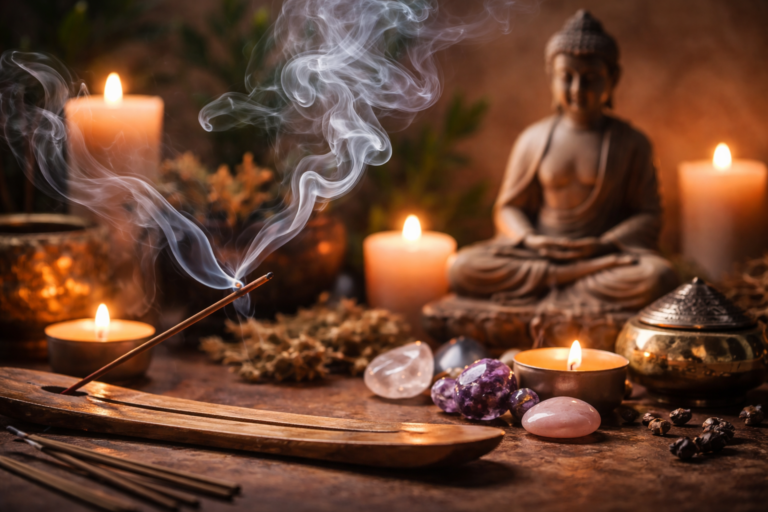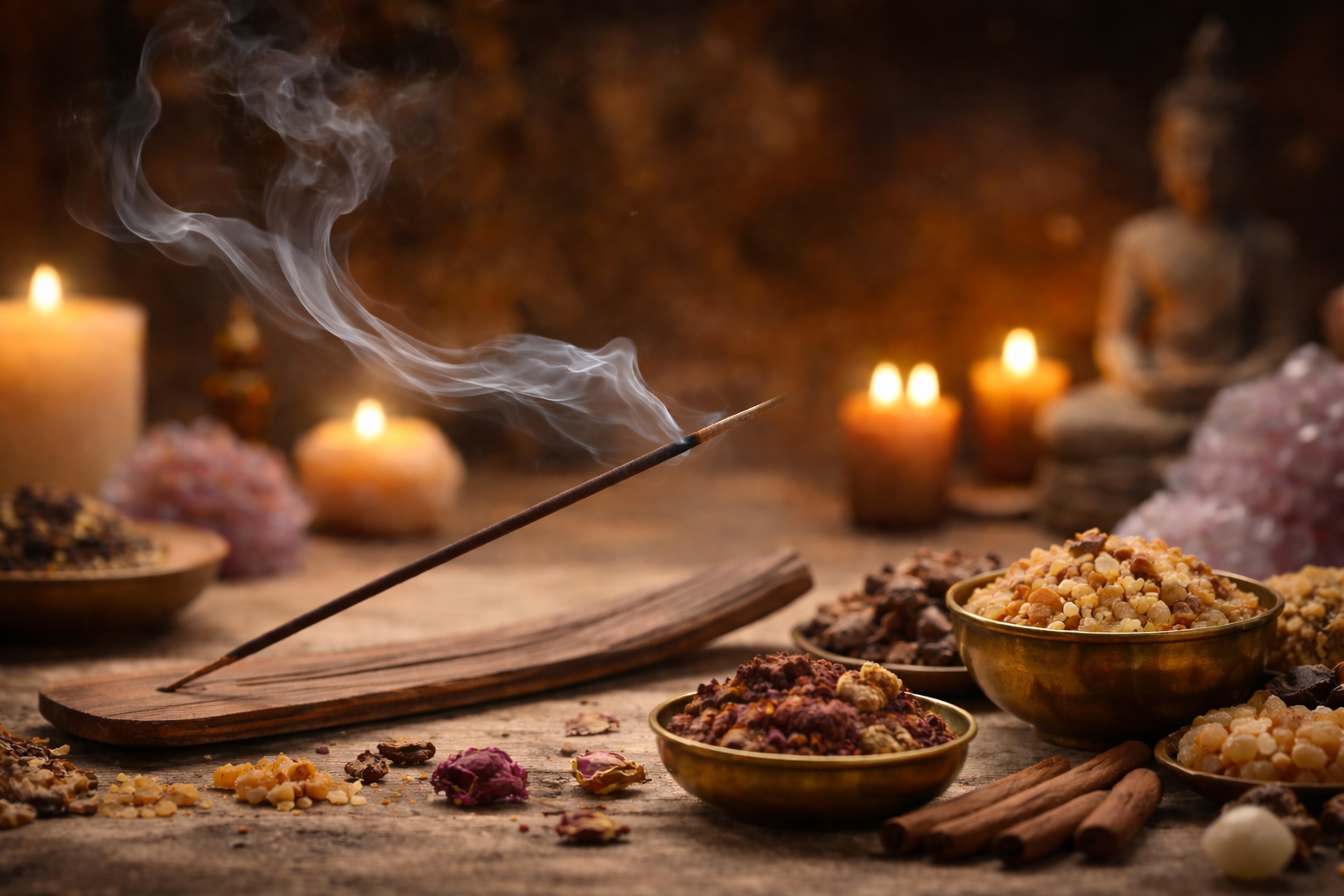

Incense has been part of spiritual practice for thousands of years. Across cultures and faiths, aromatic smoke has been used to mark sacred space, focus the mind, honour the unseen, and support prayer, meditation, and ritual. Today, incense aromas continue to play an important role in spiritual wellbeing, offering both symbolic meaning and a powerful sensory experience through scent and fragrance.
This article explores the most common incense aromas, their histories, meanings, and practical uses, while also answering some of the questions people most often ask about incense.
What are incense aromas?
Incense aromas come from natural materials such as resins, woods, herbs, flowers, and spices. When burned, these materials release a fragrance that interacts directly with the senses and, many believe, the emotional and spiritual state of the individual. In spiritualist traditions, scent is often viewed as a bridge between the physical and spiritual worlds, helping to raise awareness and create a receptive atmosphere.
A brief history of incense
The use of incense can be traced back over 5,000 years. Ancient Egyptians burned incense as offerings to the gods and as part of funerary rites. In India and China, incense became central to meditation, ancestor veneration, and temple worship. Within Christian traditions, incense was adopted early on, symbolising prayers rising heavenward and the sanctification of space.
Spiritualist churches today often draw on these older traditions, using incense aromas to support healing services, meditation circles, and quiet reflection. You can explore how different churches incorporate atmosphere and ritual by browsing the UK church listings on TheSpiritualist.org.
Common incense aromas and their meanings
Frankincense
One of the oldest and most widely used incense aromas, frankincense has a warm, resinous fragrance. Historically associated with temples and sacred rites, it is often used for purification, prayer, and spiritual protection. Many people find its scent grounding yet uplifting, making it ideal for meditation and healing work.
Myrrh
Myrrh has a deeper, earthier fragrance than frankincense and has long been linked to mourning, healing, and inner reflection. In spiritual practice, it is often used to support emotional release, remembrance services, and times of quiet contemplation.
Sandalwood
Sandalwood incense has a soft, woody scent that is calming and steady. Originating in India, it is commonly used in meditation to still the mind and encourage focus. Its fragrance is often chosen when seeking balance, clarity, and a sense of inner peace.
Lavender
Lavender incense is lighter and floral, known for its soothing qualities. Historically used for relaxation and sleep, it is popular in spiritual wellbeing practices aimed at reducing anxiety, promoting emotional healing, and creating a gentle, welcoming atmosphere.
Patchouli
With its rich, earthy fragrance, patchouli has associations with grounding and physical presence. It is often used when people want to feel anchored, protected, or more connected to the present moment, particularly during mediumship development or grounding exercises.
Rose
Rose incense carries a sweet, floral scent long associated with love, compassion, and the heart. Spiritually, it is often used in healing work, prayers for harmony, and services focused on emotional connection and remembrance.
Sage
A distinctive incense aroma widely associated with cleansing and purification, with a sharp, herbal scent that is more penetrating than many sweeter fragrances. Historically, sage has been used in ceremonial practices across several cultures, most notably in Indigenous North American traditions and in parts of Europe, where it was valued for both spiritual and practical purposes. In modern spiritual practice, sage incense is often used to cleanse a space before meditation, healing work, or mediumship, helping to clear stagnant energy and create a grounded, neutral atmosphere. Its fragrance is powerful and should be used sparingly, particularly in shared settings such as spiritualist churches, as sensitivity to strong scents varies from person to person. Read More: How Do I Cleanse a House Using Smudging?
How is incense used in spiritual practice?
Incense may be burned at the start of a service or meditation to mark a transition from everyday life into sacred time. Some people choose specific incense aromas depending on their intention, such as cleansing a space, supporting prayer, or encouraging relaxation. Others use incense simply to create a familiar fragrance that signals calm and reflection.
Within spiritualist churches, incense is sometimes used sparingly, recognising that scent can be powerful and that sensitivity varies from person to person. Good ventilation and consideration for others are essential.
Explore Meditation Practices across our website!
Is incense safe to use?
This is a common question. Incense should always be used with care. Burn it in a well-ventilated area, never leave it unattended, and be mindful of allergies or respiratory sensitivities. Using high-quality, natural incense rather than heavily perfumed synthetic products can also reduce irritation.
Does incense have to be religious?
No. While incense has deep spiritual and religious roots, many people use it purely for its fragrance and calming effects. Incense aromas can support mindfulness, relaxation, and emotional wellbeing regardless of belief system. In spiritualist contexts, the emphasis is usually on intention and awareness rather than doctrine.
Choosing the right incense aroma
There is no single “correct” incense aroma. Personal response to scent and fragrance matters more than tradition alone. Some people are drawn instinctively to certain aromas, while others choose based on the mood they wish to create. Experimentation, reflection, and moderation are key.
Incense and spiritual wellbeing today
In a modern world full of noise and distraction, incense offers a simple way to slow down and reconnect. Whether used in a church setting, a meditation group, or at home, incense aromas continue to support spiritual wellbeing by engaging the senses and creating moments of intentional calm.
For more articles on spiritual practice, meditation, and church life, explore the resources and directory available across TheSpiritualist.org.
This article was drafted using Chat GPT but Edited by Humans. The featured image was generated using Chat GPT.