
Incense has been used in human spiritual life for thousands of years. Long before written theology, people learned that scent changes mood, sharpens focus, and marks a moment as different from ordinary time. In spiritual settings, incense does not exist to decorate a room but to signal intention. In modern terms, it is a sensory technology, one that works directly on attention, memory, and emotion.
This article explores Incense in Spirituality, examining where its use comes from, how it functions across different traditions, and why it remains relevant in contemporary spiritual practice. Along the way, it addresses common questions people ask when they first encounter incense in spiritual settings.
Why is incense used in spiritual practices?
At its simplest, incense is used to alter atmosphere. Burning incense changes how a space feels within seconds. The scent, the visible smoke, and the act of lighting it combine to slow people down and draw attention inward.
Across cultures, incense has been used to:
- Mark the beginning and end of rituals
- Create a sense of sacred space
- Support prayer, meditation, and altered states of awareness
- Symbolise purification, offering, or communication with the spirit world
In spiritualist contexts, incense is often understood as a way of attuning the physical environment to more subtle states of awareness. It does not summon spirits or guarantee spiritual contact. That assumption needs challenging. Incense supports mindset and focus; it does not replace development, ethics, or discipline.
What does incense symbolise spiritually?
Symbolism varies by tradition, but several themes recur.
Smoke rising is commonly interpreted as prayer or intention moving from the physical world into the unseen. The transformation of solid resin or plant matter into scent mirrors spiritual ideas about transformation and impermanence. Fire represents energy and activation, while scent engages memory in a way few other senses can.
In Christian-influenced settings, incense symbolises reverence and the sanctification of space. In Eastern traditions, it often represents mindfulness and presence. In modern spiritualism, symbolism is usually pragmatic rather than doctrinal: incense helps people settle, focus, and step out of everyday mental noise.
How incense is used across different spiritual traditions
Incense is one of the few spiritual tools shared across many different belief systems, although its meaning and method of use differ.
In Buddhist and Hindu practices, incense is commonly offered at shrines or used during meditation. The steady burn provides a visual anchor for awareness and a gentle rhythm for breathing.
In Christian liturgical traditions, particularly in high-church settings, incense is used during formal services. The action is deliberate and ceremonial, reinforcing solemnity and continuity with historical practice.
In Spiritualist churches, incense use is varied. Some churches use it sparingly, often during meditation, healing services, or special ceremonies. Others avoid it entirely to accommodate sensitivities. Where it is used, the emphasis is usually on atmosphere rather than symbolism or doctrine. Readers interested in how different churches approach worship may find it helpful to explore the UK spiritualist church directory on TheSpiritualist.org.
In Pagan, earth-based, and contemporary spiritual practices, incense is often selected for specific intentions. Scents are chosen to align with seasonal festivals, emotional states, or ritual aims. This is where incense use becomes highly personalised.
Common types of incense and their perceived effects
Different forms of incense serve different purposes, although claims about effects should be approached with healthy scepticism.
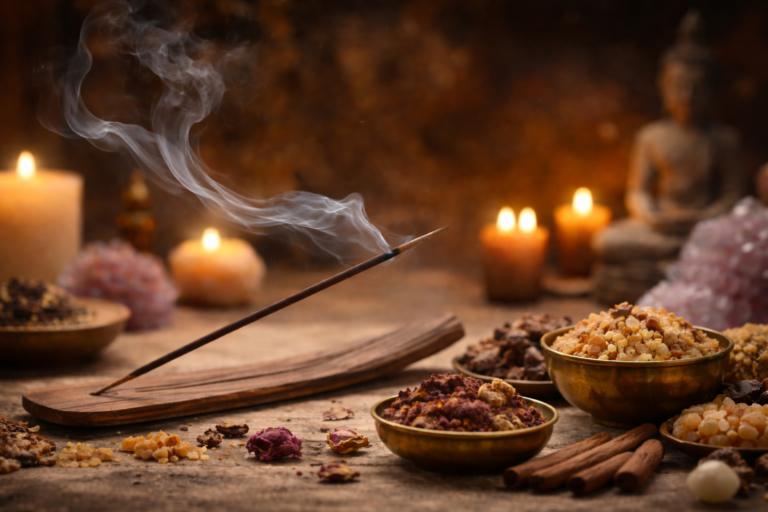
Resin incense, such as frankincense or myrrh, is traditionally associated with solemn rituals and reflective practices. Stick and cone incense is more common in home settings due to convenience and consistency. Loose herbal blends are often used in ritual contexts where customisation matters.
Certain scents are commonly associated with particular intentions:
- Sandalwood for grounding and calm
- Frankincense for contemplation and reverence
- Lavender for relaxation and emotional balance
- Sage for cleansing or resetting a space
It is important to be clear that these associations are cultural and psychological rather than scientifically fixed. Individual response matters more than tradition.
Is incense necessary for spiritual practice?
No. This assumption deserves a direct answer. Incense is not required for spiritual development, mediumship, meditation, or prayer. Many accomplished practitioners never use it at all.
Incense is best understood as an optional support tool. For some people, it helps create focus and ritual structure. For others, it is distracting or physically uncomfortable. Spiritual practice should adapt to the person, not the other way around.
Spiritualist teaching has long emphasised personal responsibility, discernment, and awareness. Incense can support these aims, but it does not substitute for them. Articles on spiritual wellbeing on TheSpiritualist.org explore a wide range of practices that do not rely on ritual tools at all.
Is incense safe to use indoors?
This is a question increasingly asked, and rightly so. Incense produces smoke and particulate matter. Poor ventilation, excessive use, or low-quality products can irritate airways or trigger headaches.
Best practice is straightforward:
- Use incense in well-ventilated spaces
- Avoid continuous burning
- Choose high-quality, natural products where possible
- Be mindful of others in shared spaces
Spiritual spaces should be inclusive. Some churches and centres now limit or avoid incense use to accommodate asthma, allergies, and sensory sensitivities.
Incense in modern spiritual life
Despite changing attitudes and greater awareness of health and accessibility, incense continues to have a place in modern spiritual practice. Its role has shifted from unquestioned tradition to conscious choice.
Used thoughtfully, incense can help mark transitions, support meditation, and create a sense of occasion. Used uncritically, it becomes empty theatre. The difference lies in intention and understanding.
As interest in Incense in Spirituality continues to grow, particularly among people exploring spirituality outside formal religion, there is value in keeping the conversation grounded. Incense is neither mystical shortcut nor meaningless relic. It is a tool, shaped by culture, psychology, and personal experience.
This article was drafted using Chat GPT AI, Edited by Humans. Featured image by OpenAI DALL-E