
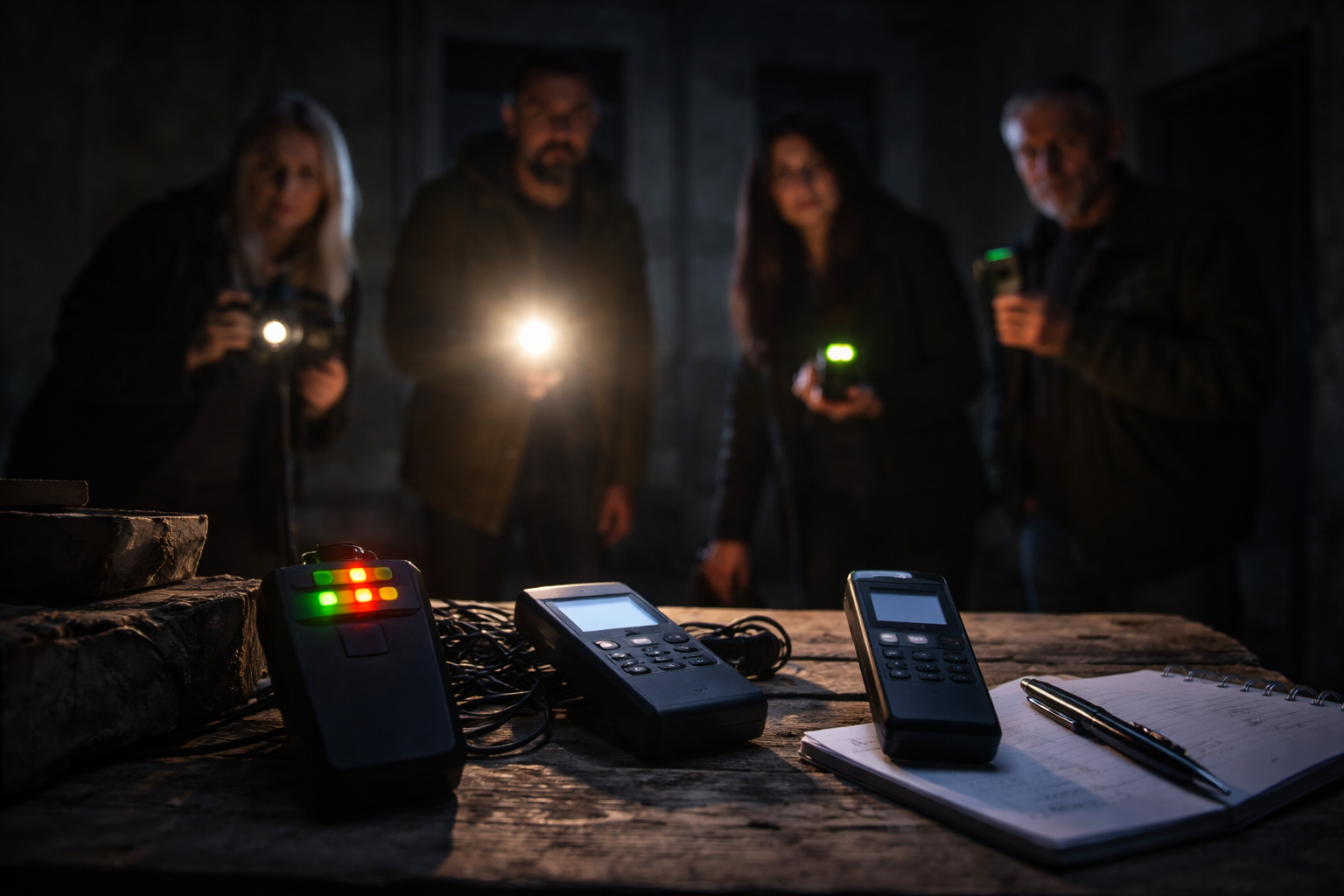

Paranormal investigations remain a popular event for spiritualists. They are not about “proving” the existence of spirit in a laboratory sense, but about exploring experiences with care, integrity and respect. When handled badly, investigations slide into theatrics or fear-based entertainment. When handled well, they can be thoughtful, grounded and spiritually meaningful.
This guide brings together practical advice commonly raised in discussions around Paranormal Investigations, while also addressing questions people frequently ask: how to prepare, how to stay safe, how to avoid self-deception, and how to gather evidence that is as objective as possible.
Have you been on a Paranormal Investigation? Tell us about your experiences below!
Understand why you are investigating
Before equipment is unpacked or lights are dimmed, be clear about your intent.
Are you seeking personal understanding, spiritual development, historical insight, or documentation of reported phenomena? Spiritualist traditions generally emphasise learning, healing and respect for spirit, not provocation or spectacle.
Investigations framed around curiosity and humility tend to be calmer, safer and more credible than those driven by a desire for dramatic results.
Make sure everyone in your group shares the same intent before starting.
Preparation matters more than gadgets
A common assumption is that paranormal investigations are primarily about technology. In reality, preparation is more important than equipment.
Research the location thoroughly. Understand its history, previous uses and any documented experiences. This not only provides context but helps avoid misinterpretation of normal environmental factors. Old buildings creak, pipes knock, and electromagnetic interference is common in urban areas.
Prepare participants mentally and emotionally. Fatigue, heightened expectation and anxiety are known to amplify suggestibility.
A short grounding or meditation exercise and prayer of protection before starting can help centre the group and reduce over-interpretation. Many spiritualist churches encourage grounding practices.
Keep participants safe both physically and psychologically
Safety in Paranormal Investigations is often discussed too narrowly. It is not just about tripping hazards in the dark, although those matter too!
Physical safety comes first. Conduct a daylight walk-through of the location. Identify unstable floors, low ceilings, poor air quality or restricted exits. Ensure torches are reliable, mobile phones are charged, and someone outside the group knows where you are.
Psychological safety is just as important. Some individuals may be more sensitive, anxious or emotionally affected by investigative settings. Make it explicit that anyone can step out at any time without judgement. Avoid language that frames experiences as threatening or malevolent unless there is genuine reason for concern.
From a spiritualist perspective, fear-based narratives can distort perception and undermine wellbeing. Calm, respectful environments tend to produce clearer experiences and healthier outcomes.
Use equipment wisely, not reverently
Electronic voice recorders, EMF meters, motion sensors and cameras are popular tools in paranormal investigations, but they are often misunderstood.
Equipment does not detect “spirits” directly. It records environmental changes that may or may not have paranormal explanations. Treat devices as data collection tools, not oracles. Always establish baseline readings before an investigation begins so you know what “normal” looks like in that space.
Audio recording is one of the most accessible methods. If you are capturing potential electronic voice phenomena, keep verbal prompts clear and spaced out, and log the exact times questions are asked. This makes later review far more credible.
Photography and video can also be useful, but avoid relying on single images. Long exposures, dust, insects and lens artefacts account for many so-called anomalies. Multiple angles and repeatability matter.
How to capture objective evidence
One of the most frequently asked questions about paranormal investigations is whether objective evidence is possible at all. Absolute proof remains elusive, but good practice can significantly improve credibility.
Document everything. Keep a written log of times, locations, environmental conditions and who was present. If something unusual occurs, record who noticed it independently before discussing it as a group.
Avoid leading questions, both verbally and when reviewing evidence. Asking “Did you hear that voice say my name?” invites agreement. Asking “What did you hear?” invites description.
Whenever possible, corroborate experiences across multiple sources. A sound captured on audio that is also heard by several people and coincides with a sensor change is more compelling than a single unexplained blip.
Respect the spiritual dimension
For spiritualists, paranormal investigations are not detached experiments. They involve interaction, however subtle, with consciousness beyond the physical. This deserves respect.
Opening and closing an investigation with a short intention or prayer can help establish boundaries and clarity. Many groups also include a formal closing to thank the space and bring attention back to the physical world. These practices are consistent with broader spiritual hygiene principles discussed in articles on protection, grounding and spiritual wellbeing across TheSpiritualist.org.
Avoid provocation techniques popularised by television. Shouting challenges or issuing threats may create emotional intensity, but they do not foster meaningful understanding and can distress participants.
Common misconceptions to challenge
A forward-thinking approach to Paranormal Investigations means challenging assumptions. Not every unexplained event is paranormal, and not every quiet investigation has “failed”. Sometimes the most valuable outcome is learning that a location is peaceful, or that experiences previously attributed to spirit have natural explanations.
Equally, scepticism and spiritual openness are not enemies. Critical thinking strengthens spiritual enquiry rather than undermining it. Holding experiences lightly, without rushing to conclusions, keeps investigations honest and grounded.
A thoughtful path forward
Paranormal investigations, when conducted responsibly, can complement spiritual development rather than distract from it. They invite patience, self-reflection and respect for both the seen and unseen. By prioritising safety, preparation and careful interpretation, investigators move away from sensationalism and towards genuine insight.
For readers interested in deepening their understanding, exploring related content on spiritual awareness, mediumship and the philosophy of spiritualism elsewhere on TheSpiritualist.org will provide valuable context. In that wider framework, paranormal investigations become not a hunt for thrills, but a disciplined exploration of mystery, one that recognises how much we still have to learn.
Have you been on a paranormal investigation or experienced any activity? Let us know in the comments below!
This article was drafted using Chat GPT AI, but Edited by Humans. The featured image was created using Chat GPT.
I had a team of investigators at my house a couple of years ago, and made contact with one male calling himself Lord and on asking further questions discovered there were 7 other “bodies” trapped in the house. Things had really quietened down but I recently acquired a new dog and from yesterday her character has completely changed, she is very aggressive and won’t come into the living room, is it possible residual spirits remained that she can sense and do you recommend anyone you think may be able to help??